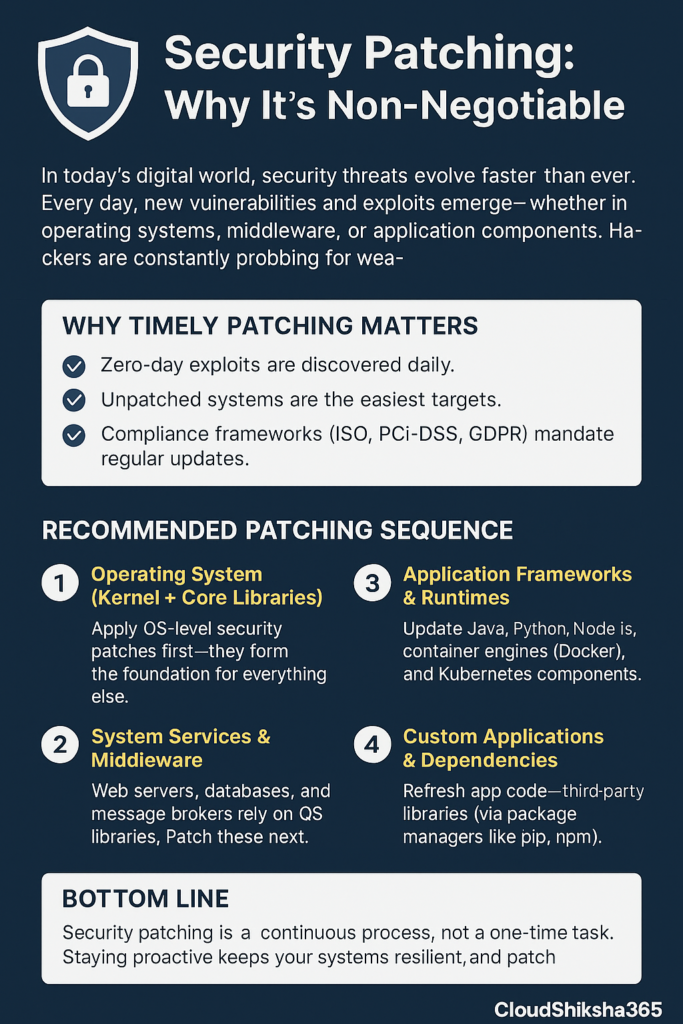
In today’s digital world, security threats evolve faster than ever. Every day, new vulnerabilities and exploits emerge—whether in operating systems, middleware, or application components. Hackers are constantly probing for weaknesses, and even a small loophole can lead to catastrophic breaches.
As security professionals, we must stay vigilant. Patching is not optional—it’s a critical defense mechanism. Time-to-time fixes ensure that known vulnerabilities are closed before attackers can exploit them. Delaying updates means leaving the door open for ransomware, data leaks, and system compromise.
Why Timely Patching Matters
- Zero-day exploits are discovered daily.
- Unpatched systems are the easiest targets.
- Compliance frameworks (ISO, PCI-DSS, GDPR) mandate regular updates.
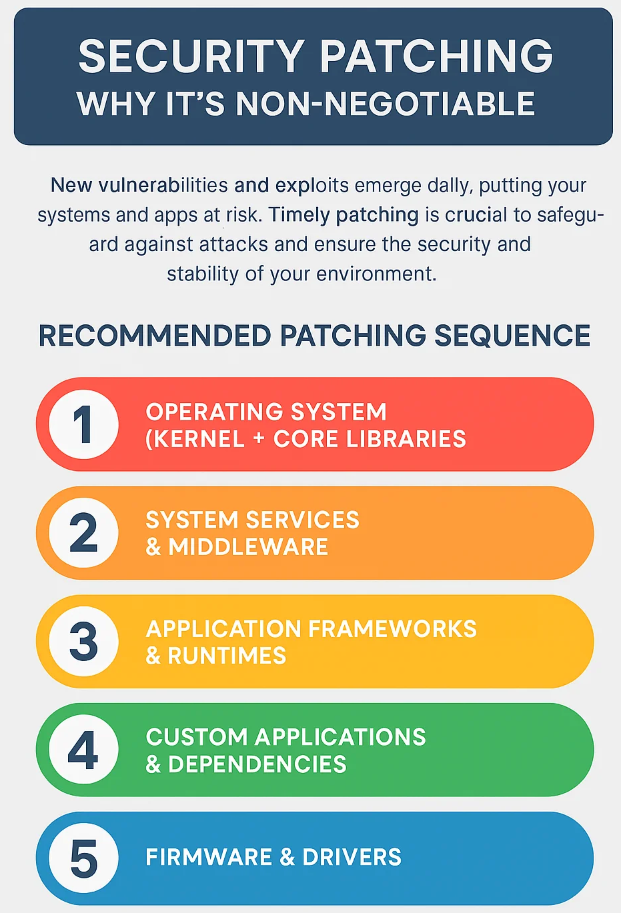
Recommended Patching Sequence
To maintain stability and security, follow this order:
- Operating System (Kernel + Core Libraries)
Apply OS-level security patches first—they form the foundation for everything else. - System Services & Middleware
Web servers, databases, and message brokers rely on OS libraries. Patch these next. - Application Frameworks & Runtimes
Update Java, Python, Node.js, container engines (Docker), and Kubernetes components. - Custom Applications & Dependencies
Refresh app code and third-party libraries (via package managers likepip,npm). - Firmware & Drivers
Less frequent, but important for hardware security and stability.
CS365 Conclusion 🙂
Security patching is a continuous process, not a one-time task. Staying proactive keeps your systems resilient and your data safe. Patch early, patch often, and patch in the right sequence.